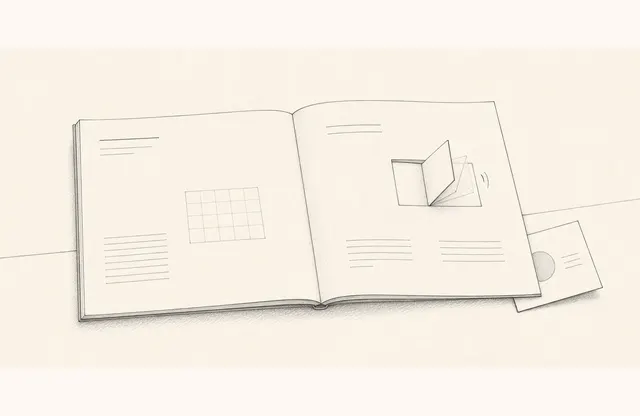
“Turn these 50 pages into one” sounds like a request to reduce length. But when the actual reader is an executive or another decision-maker, they do not need a miniature version of the original. They need to understand what must be decided now and have a path back to the conditions and evidence they may need to verify.
As a summary gets shorter, its conclusion becomes clearer while the scope of its claims can easily disappear. A good summary does not preserve everything. It is a map that preserves both the information needed for a decision and the way back to the source.
Write the decision question before setting the length
Before shortening the source, define in one sentence the question readers should be able to answer after seeing the content. The information that must remain will differ depending on whether they are deciding to begin a project, choosing between options, or identifying risks that need further review.
Without a decision question, it is easy to retain only the most interesting figure or forceful sentence. When the question is clear, you can choose the claims, conditions, and next action the summary needs. If one page must support several decisions, show their priority and dependencies first.
Keep the claim, conditions, evidence, and source path together
Even in short-form content, keep these four elements from drifting apart.
- Claim: What do we know or recommend?
- Conditions: For which audience, period, assumptions, and exceptions does it apply?
- Evidence: Which figures, examples, documents, or reviews support it?
- Source path: Where can someone verify the details?
When space is tight, reduce the strength of the claim instead of deleting its conditions. A conclusion with many exceptions should reveal its limits—“can be considered under these conditions” rather than “is effective.” Include the source title, reference date, and relevant section or page so reviewers do not have to accept the summary on trust alone.

Restore the baseline before enlarging a number
When a number moves from a long report into a single card, its unit and comparison baseline are often the first things to disappear. Keep whether it is an amount or a percentage, the period and population it covers, whether it is a forecast or an observation, and its source close to the number.
Do not shrink a complex table until it is unreadable on a small screen. Summarize only the comparison dimensions needed for the decision and link to the full table. Even if several indicators seem to point in the same direction, do not combine them into one conclusion if their measurement dates or samples differ. Visual emphasis does not make the evidence stronger.
Add an intermediate layer between one page and the source
Packing every exception and explanation onto one page only makes the document difficult to read again. Separate the levels of depth instead.
- First screen: the decision question, recommended direction, and most important conditions
- Short explanation: differences between options, key evidence, and major risks
- Source: detailed analysis, full tables, methods, and appendices
Make the summary, slides, and video point to the same source and show the latest revision date. If a derivative makes a stronger claim than the source, do not publish it until the discrepancy has been reviewed.
When the source is updated, also check which revision each derivative was based on. Changing only the source link while leaving old figures and conditions in place creates a path back to the original but leaves the summary itself outdated.
Compare the meaning after changing the format
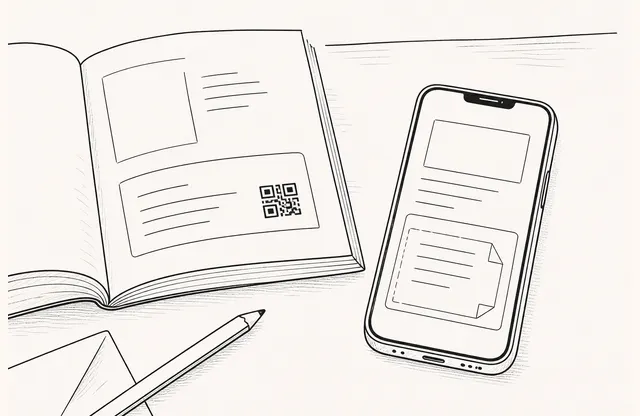
Feat AI points toward reorganizing PDFs for formats such as mobile reading, summary slides, and short videos. Changing the format also changes the order and emphasis of information, so a person needs to check again whether the result preserves the central claims and conditions.
The comparison points differ by format.
- Mobile reading: Have table columns and footnotes been separated from the content they qualify?
- Summary slides: Have exceptions and reference dates been cut away, leaving only a stronger-sounding conclusion?
- Short video: Is there a static frame or source path where viewers can read the sources and conditions again?
Also check that autoplay or visual emphasis has not created a new hierarchy of importance. Restoring information that is easily lost in each format matters more than producing more formats.
Review with four sentences at the end
Before publishing, read only the summary and answer these four questions.
- What needs to be decided?
- Under which conditions can this claim be used?
- What are the baselines for the evidence and figures?
- Which source should someone return to for more detail?
If any answer is missing, the summary has removed information needed for the decision along with the length. The standard for shortening a long PDF well is not the page count. It is whether readers can make a quick judgment and still return to the depth they need.