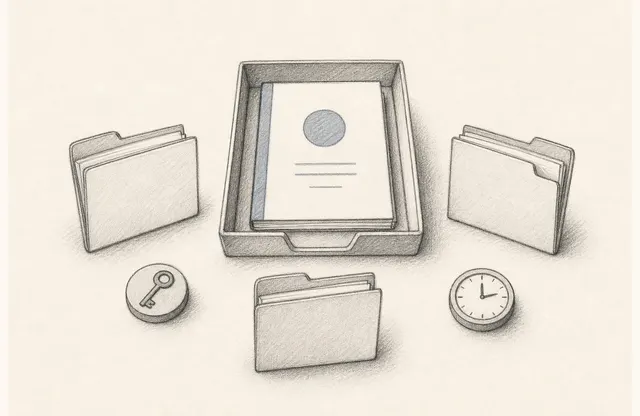
Brand documents are easier to manage by link when they change often and several customers or partners need the current version. Keep a separate record when the exact version originally sent must be preserved.
Which documents belong behind one reference link?
Brand guidelines, product introductions, and campaign instructions often change after distribution. A shared reference link can reduce the pile of similarly named attachments and give recipients one place to check the current material.
This model is less suitable for a quotation or other document that must remain exactly as sent. Archive that version separately instead of replacing it. Decide this before distribution so the team does not mix a current reference with a historical record.
How should updates be announced?
Keeping the address stable does not tell a recipient that the content changed. Name the revised area, the date, and whether the recipient needs to act. “Logo spacing changed on page 6; please use this version for work starting Monday” is clearer than “Here is the latest file.”
FeatPaper can keep a document available at the same link after an update. The document owner still needs to maintain a change note and contact the people affected.
What does a viewing period control?
A viewing period can align access with a campaign or collaboration window. Treat it as a schedule for when the document can be opened. Sensitive material may also require separate permissions, contractual terms, and an internal distribution policy.
Distribution checklist
- Identify the owner of the current document.
- Decide whether the originally sent version needs its own archive.
- State what changed, when it applies, and who should respond.
- Set and review the viewing period against the project timeline.
- Confirm the link on the devices partners normally use.
What remains for native review?
An English reviewer should confirm the terminology used for brand assets, the update notice, and the CTA. Product statements must stay within the preserved source and evidence references before owner review.