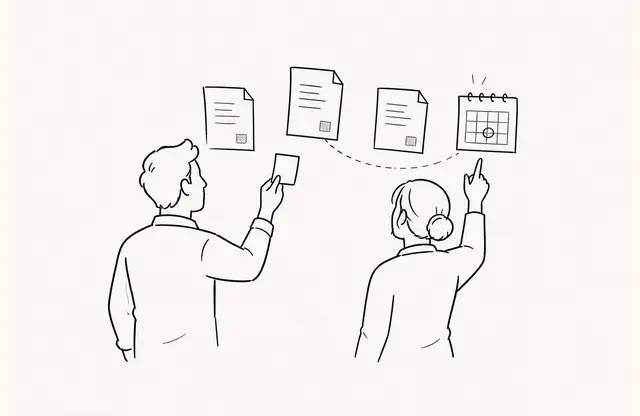
Manage a PowerPoint sales deck by customer link only if the team also records which customer received which revision and what question should guide the next follow-up. The link alone is not the customer history.
How should the deck be prepared?
Separate the editable source deck from the shared version. Give the shared document a clear purpose, revision date, and owner. Review the opening message, page order, charts, long tables, and mobile readability before distribution.
Create a customer record that includes the link, revision, send date, recipients, and the context from the last conversation. This prevents a later update from erasing which story a particular customer saw.
What can the team observe?
FeatPaper can show when the document was revisited and the page-level viewing flow when supported by the cited evidence. A long visit to pricing, implementation, or another section does not identify the reason.
Compare the record with questions the customer actually asked. Use it to choose a topic for clarification, not to assign a sales outcome.
How should the next message be written?
Refer to the customer’s stated need and ask one answerable question. If the deck changed, explain the relevant revision before asking for feedback. Keep internal viewing detail out of the message unless it is genuinely necessary.
Customer-link checklist
- Is the shared revision connected to the customer record?
- Are source slides kept apart from the shared version?
- Does the deck work on the recipient’s likely device?
- Are observations separated from sales interpretation?
- Is the next question based on conversation context?
What remains for native review?
An English reviewer should check sales terminology, PowerPoint references, and follow-up tone. Product facts and CTA wording must be confirmed against the preserved sources.