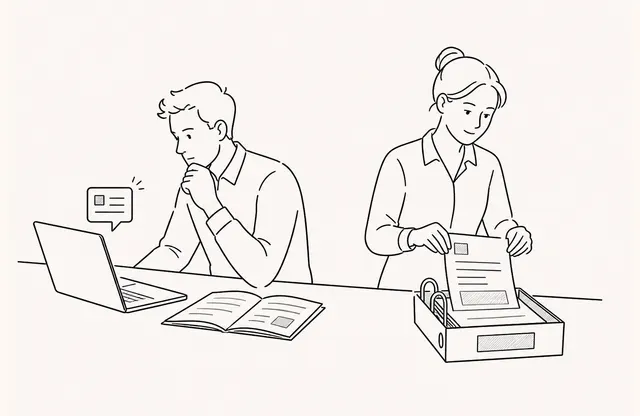
You start the morning with viewing records from several customers. One revisited the same page, another clicked a link, and a third mentioned an internal review date but has not answered a key question. Should you contact the customer who spent the most time with the document first?
You do not need to follow up in order of viewing volume. Decide whom to contact and what to ask by looking at the question that still needs an answer and how close the next scheduled step is. Viewing records point to what may need checking; they are not a ranking of customer interest.
More Views Do Not Always Mean Follow Up First
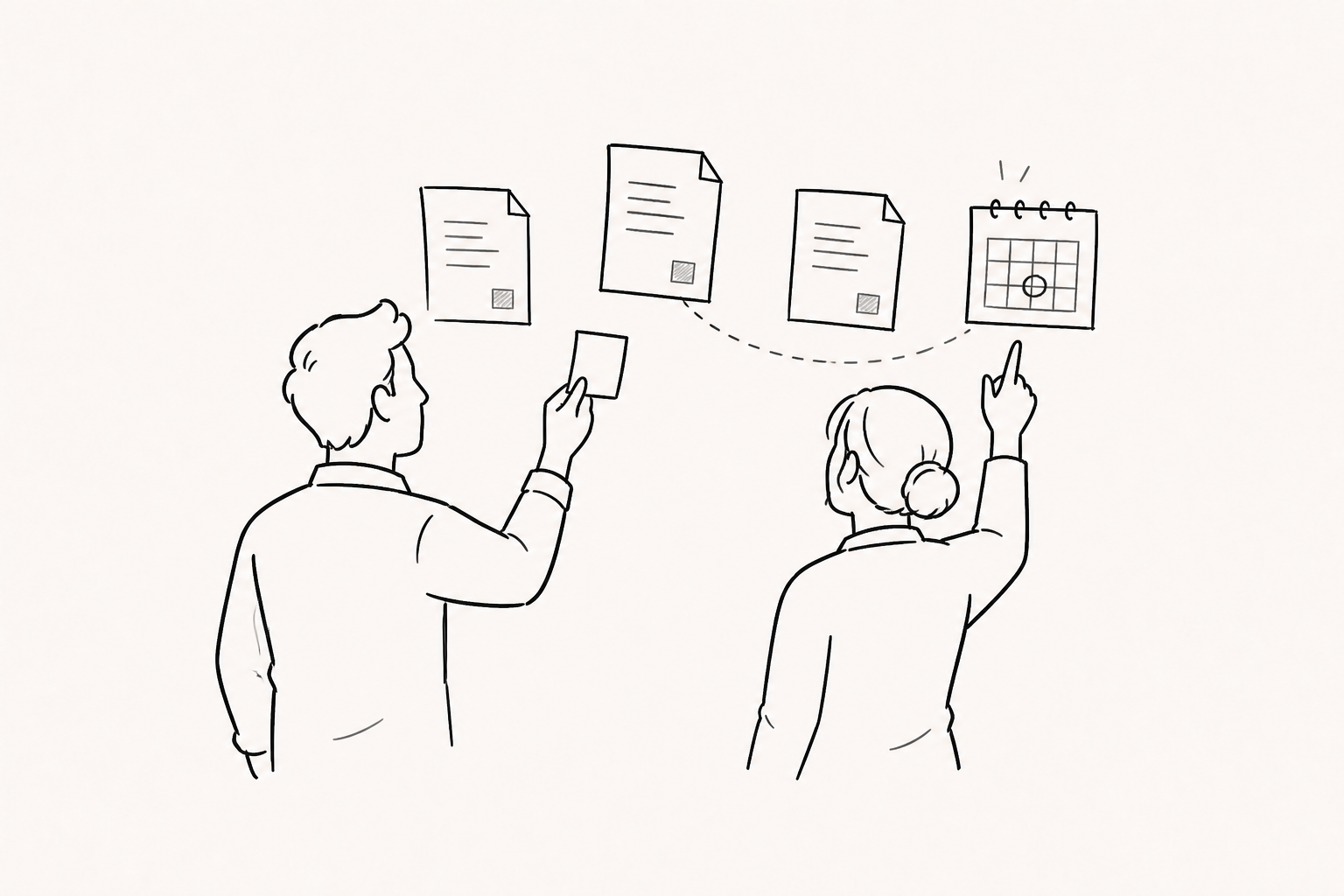
The first customer to contact is not the one with the longest viewing time. It is the one with both an unanswered question and an approaching deadline or next step. Revisits and longer viewing are observed facts, but they do not establish purchase intent or the likelihood of a deal.
Start by writing down one unresolved item for each customer. It might be the scope of a quote, the date of an internal review, or the person who can answer a technical question. Then add the question blocking that item and the time by which an answer is needed. The same revisit can call for a different follow-up order when one answer is needed before tomorrow’s meeting and another review is not planned until next month.
Look at Four Inputs, Not Viewing Records Alone
Viewing records alone cannot determine follow-up order. Review the observed behavior, the customer’s explicit response, the unanswered question, and the timing of the next step together.
| Input | Record the fact as observed | How it helps set follow-up order |
|---|---|---|
| Observed document behavior | Revisited pages, time spent, link clicks | Identifies what to check first |
| Explicit customer response | What they replied, requested, or said was on hold | Confirms the situation in the customer’s own words |
| Unanswered question | One item to confirm, such as scope, timing, or owner | Defines what to ask in the follow-up |
| Time sensitivity | When the answer is needed and the next scheduled step | Defines when the check must happen |
FeatPaper lets you review observed records such as document access, page-level viewing, revisits, and link clicks. These records are inputs for follow-up review; they do not automatically set priority or determine a customer’s intent. The account owner still needs to combine them with the customer’s replies and the sales context.
Define the Next Action, Not a Customer Grade
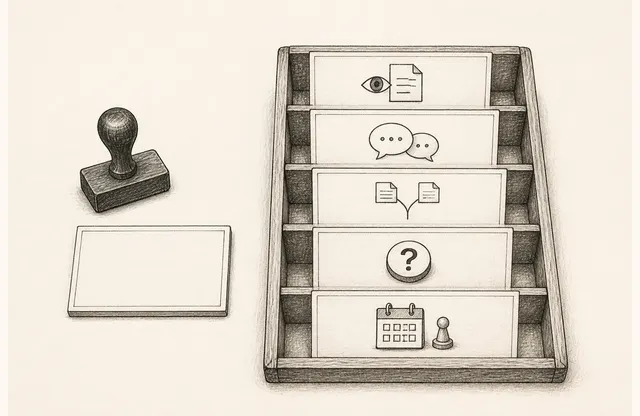
For a team to use a consistent standard, it is safer to define a next action for each item to confirm than to assign a grade to the customer. Actions such as check now, check at the agreed time, and keep as an observation help prevent the team from treating a viewing signal as a customer attribute.
Check now: An unanswered question is blocking an approaching next step.Check at the agreed time: The customer has stated when they will review, and the question to confirm before then is clear.Keep as an observation: There is a behavior record, but no clear question or deadline yet.
These labels are not permanent customer grades. Apply one only to a specific item paired with one question and one deadline. When the customer replies or the schedule changes, close that item and reassess. Do not move an item up solely because activity is high, or down solely because there has been no viewing.
Decide Whom to Contact Separately
Setting the follow-up order is not enough. You also need to identify the person who can answer the unresolved question or set the next date. When reaching out, lead with one question to confirm rather than presenting an interpretation of the viewing record as fact.
For example, an account with an internal meeting tomorrow and an open scope question should be checked before an account that only has a link click and no scheduled next step. Even if someone viewed the pricing page several times, you cannot immediately conclude that “a purchase review is underway.” If the customer said they would return to it next month, respect that timing and schedule the check accordingly, even if a click was recorded.
For every item on the follow-up list, write down the person to contact, the question to confirm, and the time the answer is needed. If you cannot fill in all three, the record may be an observation that needs more context rather than a reason to contact someone immediately.
Refine the Criteria Based on What You Learn After Contact
Judge whether the criteria are working by what the follow-up clarifies, not by whether a contract follows. Did you get an answer to the question? Did you confirm the next date or owner? Did you learn that no action is needed for now? Those are the useful review outcomes.
Briefly review follow-up outcomes each week and refine the criteria. If an item marked check now had no actual deadline or unanswered question, narrow the rule. If the team missed a stated schedule and open question and the next action was delayed, give time sensitivity more weight. Do not work backward from a deal outcome and turn a viewing pattern into a success signal.
Document viewing signals do not decide whom you should contact first. Use observed facts to find what needs checking, then combine them with what the customer explicitly said, the question still waiting for an answer, and the next scheduled step. The practical standard is to follow up based on the unanswered question and when the answer is needed—not on who viewed the document the most.