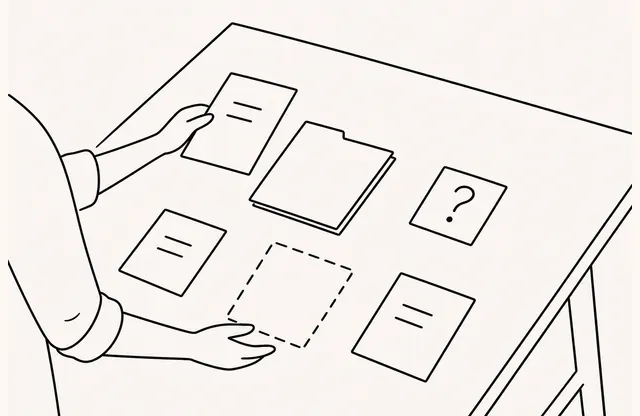
An OEM/ODM catalog can contain extensive material and dimensional information and still produce vague quotation inquiries. Units differ by product, tolerance and sample conditions are scattered through footnotes, and MOQs and lead times use different baselines. Buyers may review many products and still need to ask what can be compared on equal terms.
An evaluation catalog is not meant to display every manufacturing capability at once. Its role is to help buyers narrow their requirements using consistent criteria and prepare the questions that must be answered before an RFQ.
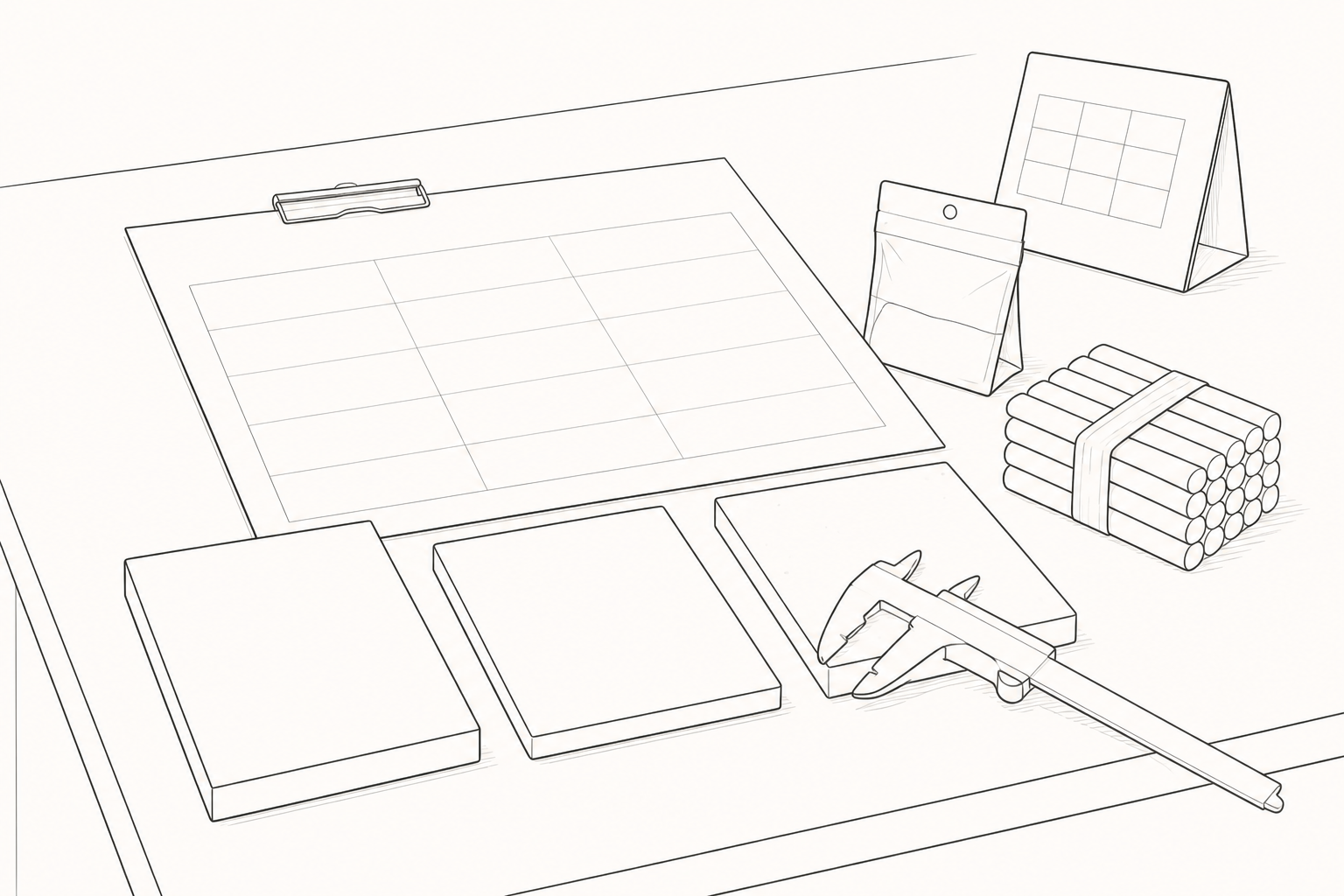
Align the comparison unit before the product groups
A table of contents organized only by process or internal department makes it difficult for buyers to enter through their own requirements. Begin with dimensions that change the evaluation: use case, material family, size range, and order model.
Keep the same kind of value in the same row of a comparison table. If one product lists thickness and another lists only weight, a table can have many populated cells and still be hard to use. Mark unavailable values as requiring separate confirmation rather than estimating them.
Present materials, specifications, and tolerances as one set
A material name alone does not establish performance or suitability. Connect material grade, surface treatment, dimensions, measurement method, and tolerances. A tolerance needs the dimension and condition to which it applies, not only a number.
Keep at least these fields in the same order for every comparison row:
- Item and unit
- Standard value or available range
- Applicable conditions
- Tolerance and measurement method
- Input the buyer must provide
- Exceptions requiring separate review
Distinguish standard specifications from items that vary by order. Do not present an optional range as a default offering. Certification or regulatory suitability should not be asserted without confirmed documentation and an applicable scope.
Describe a sample as a review stage, not a production promise
A sample page should state its format, required inputs, what it can confirm, and what it cannot confirm. A sample result should not be presented as proof of mass-production quality or lead time.
Show buyers what to inspect: appearance, dimensions, assembly fit, and packaging, for example. Direct additional testing or separate approval items to the responsible contact.
Pair MOQs and lead times with their reference points
An MOQ needs more than a product-level number. Explain whether it changes by color, dimension, packaging, or order unit. A lead time should identify the event from which it is counted, such as sample approval, specification confirmation, material preparation, or production scheduling.
Separate estimated from confirmed lead times and mark conditions that remain unresolved during quotation. Do not generalize pricing, cost, or production performance without evidence. Actual amounts and schedules require separately confirmed requirements.
Put pre-RFQ questions inside the catalog
There is no need to describe automated quotation requests. A catalog becomes more useful when it collects the information buyers often miss before sending a request.
- What is the final use case and operating environment?
- Which materials, dimensions, and tolerances are already defined?
- What should the sample confirm first?
- What quantity is expected, and could orders repeat?
- What is the desired delivery date, and which approvals must come first?
- Are there special packaging, labeling, or inspection-document requirements?
Leave unanswered items blank and narrow them with the responsible contact. Do not claim that the document itself creates a quote or confirms an order.
Use viewing records only to prepare follow-up questions
FeatPaper can show document-level visits, time spent on pages, and page interactions. If a material table or MOQ page has a viewing record, that can suggest a condition to ask about during the next conversation.
The record does not explain why someone stayed on a page. Do not treat it as proof of product interest, purchase intent, or likelihood of a contract. Convert it into an answerable question, such as, “Was there anything about the material, tolerance, or quantity conditions that you wanted to clarify?”
An OEM/ODM catalog is a working document for aligning evaluation conditions, not simply a showcase. Use one structure for materials, specifications, tolerances, samples, MOQs, and lead times, then connect unresolved conditions to RFQ questions.