The review is over. Should the link to the technical proposal you sent months ago still be open?
A technical proposal rarely has one reader or one decision. Business stakeholders assess scope and expected value. Technical teams examine architecture and implementation conditions. Security, legal, and procurement teams look for data-handling details, responsibility boundaries, exceptions, and commercial terms.
Putting everything in one file and sharing one link is convenient, but it blurs who needs which information and why. Before choosing stricter controls, decide how the review should be divided into distinct access boundaries.
Why does one file create one access boundary?
A single PDF may contain the company overview, proposed scope, architecture, security policies, pricing, and timeline. Once shared, however, every recipient receives that entire information set.
If detailed security material sits behind the same link as the business case, early reviewers see more than they need. If those details are removed to keep the file broadly shareable, the actual reviewer has to ask for them again. The right dividing line is not page count or file size. It is the question each reviewer must answer.
- Business: What are we adopting, and how will the operating scope change?
- Technical: How would this work in our environment, and what are the constraints?
- Security and legal: What data is handled, and where do scope and exceptions apply?
- Procurement: What does the price include, and what are the schedule and contract conditions?
Different questions can justify different access boundaries.
Divide the material around the review process
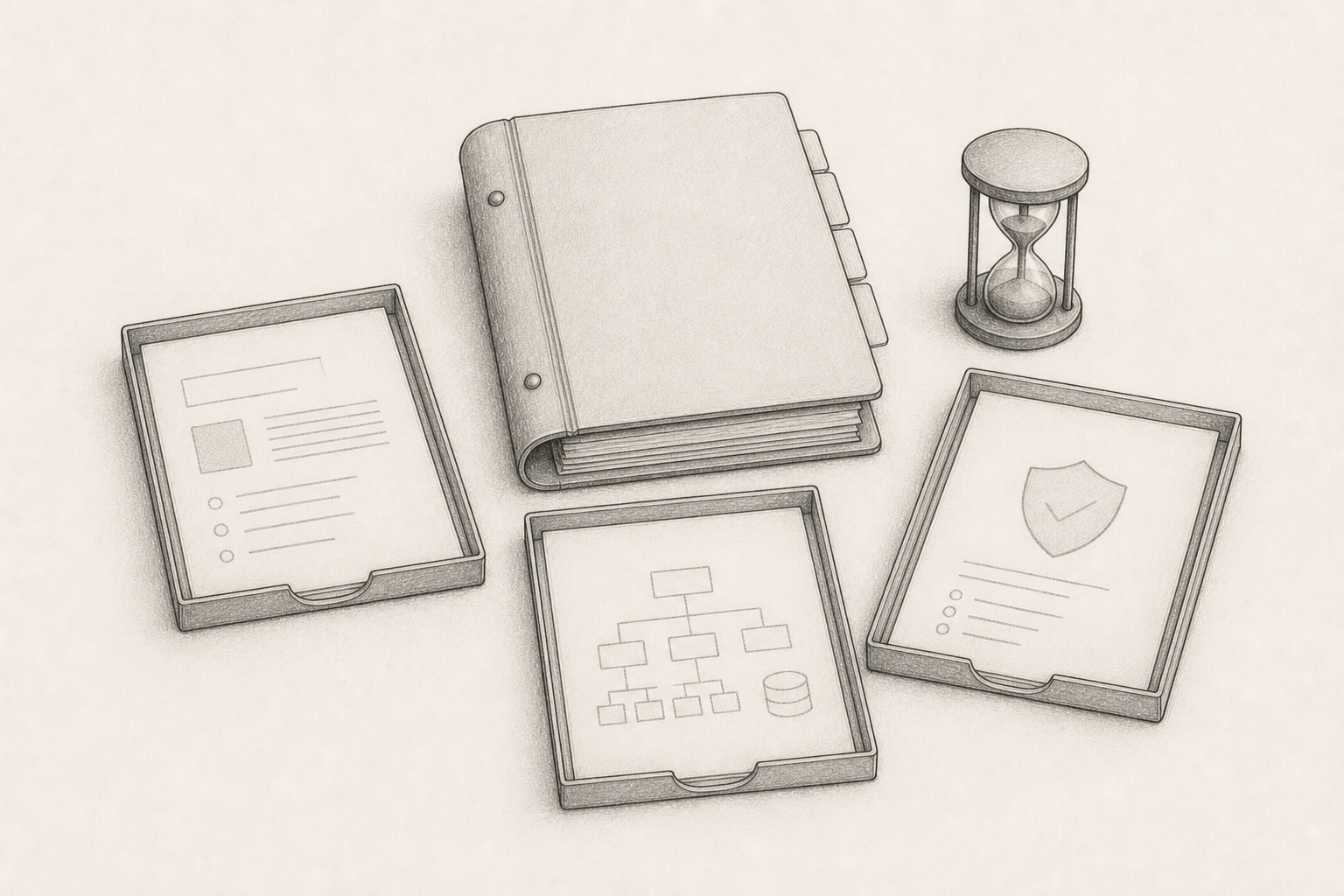
Keep the shared proposal focused on the problem, proposed scope, delivery approach, and key milestones—topics that several stakeholders need in common. Put detailed architecture and operating conditions in technical review material. Keep security policies, evidence, and exceptions in a separate security review packet.
The goal is not to hide sensitive information by default. It is to give each reviewer enough information at the right stage. Share the main proposal during business review. When technical review begins, send the relevant material to the technical owner. Once a security review is requested, confirm its scope and participants before sharing the supporting packet.
Set four rules before creating a link
-
Who can review it? Define recipients for the main proposal, technical material, and security packet separately. Use the roles participating in this review, not a broad label such as “the customer.”
-
How long should access remain open? Match the access window to the review schedule so a convenience link does not outlive the project.
-
Is a download required? Procurement or security procedures may require a retained file. Other stages may only need browser access. Decide by document type and the customer’s process.
-
Who closes the share? Assign an owner before the review ends. Without clear ownership, old links and superseded versions tend to remain available.
Operate a separate sharing path for each document
With FeatPaper, the main proposal and supporting technical or security material can be shared as separate links. Teams can set a viewing period and decide whether the original PDF is available to download for each document. When a review ends, sharing can be paused to close future access through that link.
Document access and page-view records can help a team understand the review sequence. If the proposal has been opened but the technical material has not, the next step is not to declare a lack of interest. Ask whether the technical review has started and who owns it.
These records show access, not approval. They do not prove that a security review is complete or that the content has been accepted. Link settings also do not replace an NDA, contractual confidentiality duties, or the customer’s security review. Pausing a share cannot retrieve files that were already downloaded or captured elsewhere.
Close the link when the review ends
Sharing does not end when the link is sent. Documents required for a final contract or ongoing operations may be retained through the agreed process. Detailed review packets, old price sheets, and superseded proposals may no longer need to remain open. When a new version is issued, make the current link unmistakable.
Pre-share checklist
- Are recipients separated for the proposal and the technical and security material?
- Does each document answer a clear review question?
- Have you set the access window and download rule?
- Is someone responsible for closing the link after review?
- Are you treating viewing records as observations rather than approval or buying intent?
- Are the NDA and the customer’s security process being handled separately?
Technical-proposal security does not start by placing every detail in one file and adding stronger claims. It starts by deciding who needs to review what, for how long, and by closing the sharing path when that review is complete.