The pricing page held a visitor longer than any other page in the proposal. One person on the sales team sees price resistance. Another sees a buyer moving closer to a decision.
Either explanation is possible. The visitor may have been comparing amounts, working out the billing unit, copying figures into an internal memo, or looking for an exception in the fine print.
Time on the pricing page is a question, not an answer. Before interpreting the visitor, check whether the page makes the pricing model easy to understand.
Show the pricing logic before the price
“$500 per month” is not enough to calculate a real cost. The number changes meaning depending on whether it covers one user, one team, or a set amount of usage. A useful pricing page separates five things:
- the billing unit and base allowance
- features and support included in the base price
- conditions that create additional charges
- contract term, payment schedule, taxes, and quote validity
- variables that require a custom quote
If one of these is unclear, the visitor may stay because the total cost is impossible to estimate—not because the price itself is too high.
Give the summary and the quote different jobs
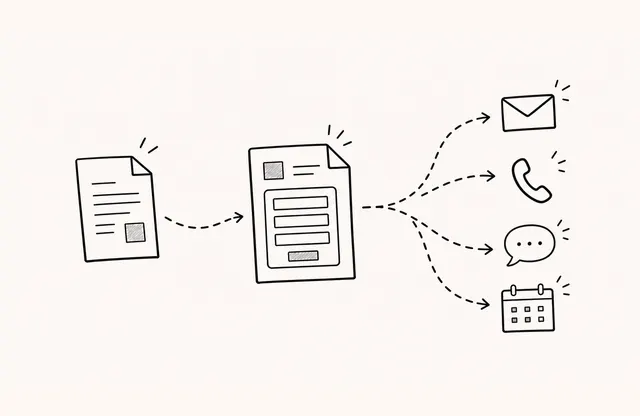
The product document should summarize plan differences, representative pricing, what is included, and which conditions need a closer look. The detailed quote or appendix can carry quantities, discounts, taxes, validity dates, delivery, support coverage, and exceptions.
Sending every condition to “contact sales” makes internal review difficult. Packing every contract term onto one page buries the choice in footnotes. Keep the figures and terminology consistent across both documents while letting readers choose the level of detail they need.
Ask about the conditions, not the viewing record
FeatPaper can surface document behavior such as time by page, repeat visits, and link clicks. A long visit to the pricing page still does not establish price resistance or readiness to buy.
Telling a customer “We saw how long you spent on pricing” can feel intrusive. Ask about the decision conditions instead:
“Was there anything you wanted to clarify about the included scope or contract terms?”
“Would a separate quote help you compare the cost for your expected team size or usage?”
Offer a smaller next step
“Book a meeting” may be too large a step for someone still comparing options internally. A pricing page can offer a scope question, a detailed quote, an internal summary, or a meeting request. A click is still only an observed action; it does not confirm budget approval, and no click does not prove a lack of interest.
What should the pricing-page checklist cover?
- Are the billing unit and included scope clear?
- Can the reader find additional charges and quote assumptions?
- Do the summary and detailed quote use the same figures and terms?
- Are similar questions appearing across several conversations?
One long visit is not a reason to rewrite the page. Repeated questions about billing units, included scope, or the route to a detailed quote are a better reason to review its structure. A good pricing page helps a reader calculate, compare, and identify the next question. It does not try to turn time spent into a verdict.